A kasbah, or casbah, is a fortified building with a tower at each of its four corners. In the past it served as a refuge in times of attack and as a granary for storing harvests. Today the kasbahs are a priceless part of Morocco’s architectural heritage. Some are UNESCO World Heritage Sites, such as the ksar of Aït Benhaddou; others have been restored and turned into places to stay. Most, sadly, have not been so fortunate and are falling into ruin.
Homes of the lords
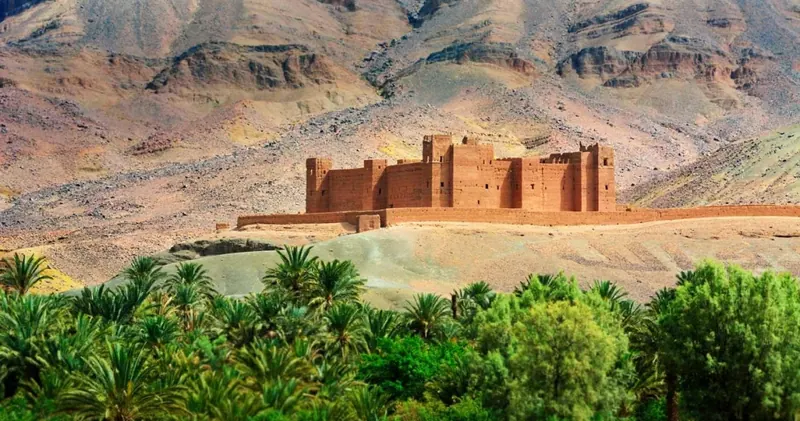
These superb earthen buildings played a fundamental role for centuries. Fortified homes of the local lords, isolated and built in commanding positions, they expressed the authority of the caids (the sultan’s representatives) or the pashas (governors of an imperial city). The kasbahs controlled the oases and the routes leading to them, served as supply points for desert dwellers and defended caravans against bandits and raiders. Today they are more often home to local dignitaries or farmers, when they have not simply been abandoned.
An architecture of earth
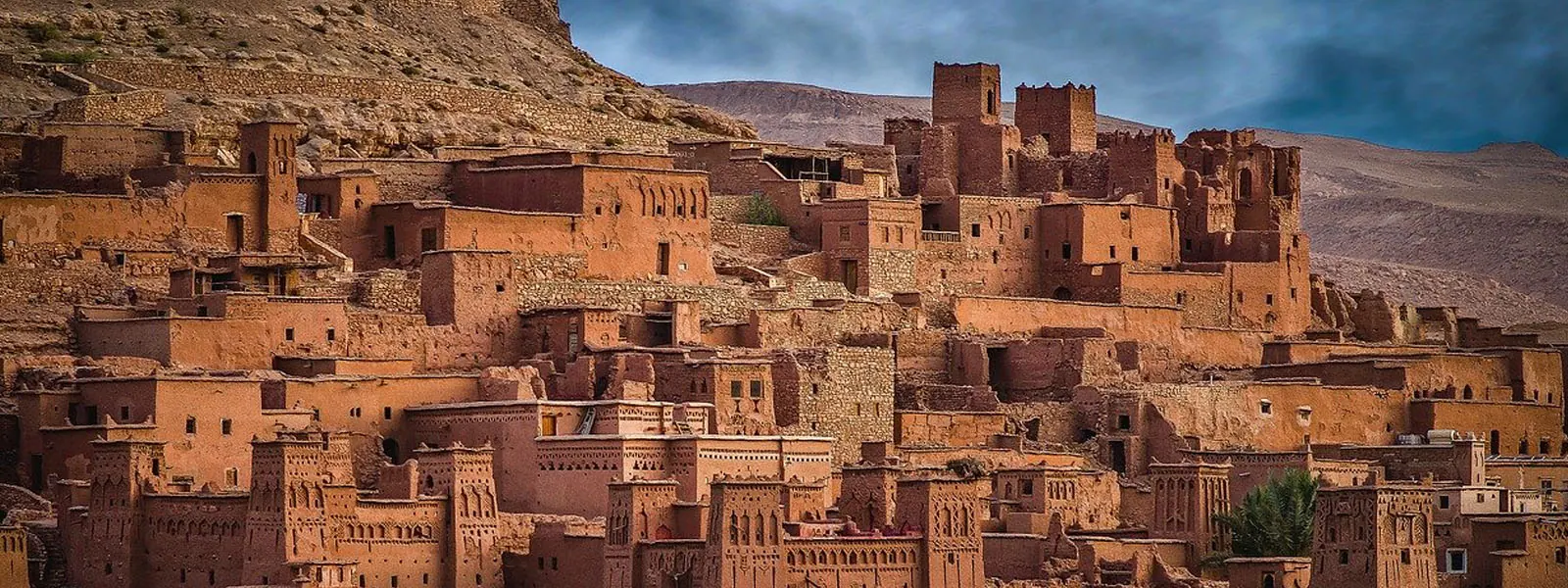
Kasbahs follow several building rules. On stone foundations, thick walls flanked by four corner towers topped with stepped merlons define the building. The walls are made of rammed earth, a mix of earth and straw using an ancient technique that insulates against both heat and cold. At the heart of the house, a patio acts as a true well of light. The outer decoration of the towers and upper walls is in adobe, sun-dried clay bricks used to create recessed and raised patterns that pierce the upper sections.
From kasbah to ksar
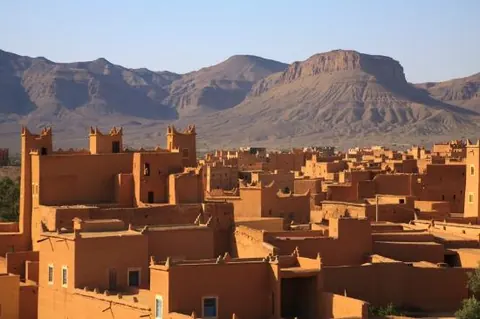
Not every kasbah belonged to a pasha. Simpler rural homes are grouped together in a single village: protected by ramparts with a single gate, they form a ksar (plural: ksour). Built of rammed earth, these villages take on the colour of the earth they come from, from ochre to red, which makes each one different. Originally, this rural architecture was built by nomadic families who, having decided to settle, wanted something sturdier than their woollen tents to withstand the weather and their enemies. That is why the ksour, small fortresses, usually stand on rocky outcrops or at the edge of cliffs.
Ouarzazate, the Drâa valley and the Dadès valley hold the finest examples of this remarkable earthen architecture.
Calmer and less crowded than the medina, the kasbah tells a little more of the story of the town and the country. It is truly worth the visit.
Kasbahs are something truly extraordinary in Morocco. Many towns have one, each with its own charm: magnificent buildings, a unique style and an atmosphere almost out of time.
The kasbahs we recommend
The Kasbah Amridil, Skoura
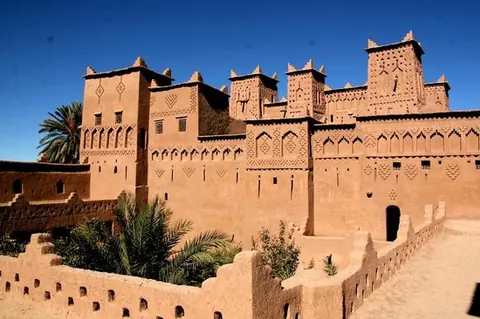
In the heart of the Skoura palm grove, near Ouarzazate, it is open to the public for an entrance fee. Built in the 17th century by the Nassiri family, it has been used to film several movies, including Lawrence of Arabia and Ali Baba and the Forty Thieves, and appeared on the old 50-dirham banknotes.
The ksar of Aït Benhaddou
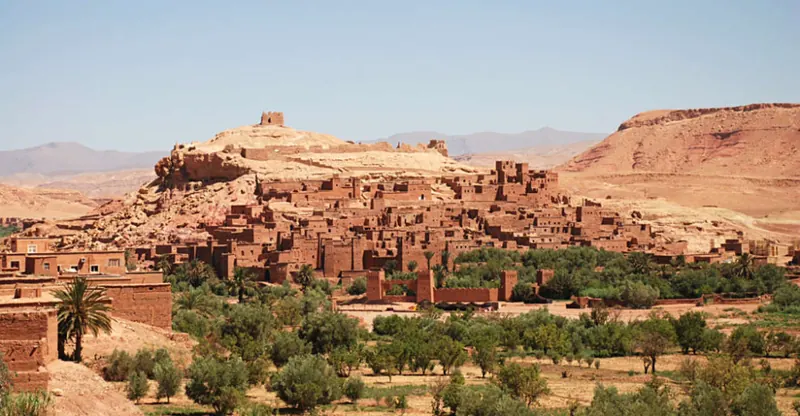
This ksar is a UNESCO World Heritage Site. Less than 200 km from Marrakech, it makes a fine day trip from the Ochre City. Here too, film-makers have made the most of its magnificent setting. Clinging to the hillside, it is a majestic sight.
The Kasbah Bab Ourika

Not far from Marrakech, this kasbah, now a wellness hotel, is an invitation to relax. It has lost none of its splendour and offers a magnificent view over the Ourika valley.
The Kasbah of the Udayas, Rabat

This former fortified military camp has been a UNESCO World Heritage Site since 2012. It is made up of several monuments that trace its history and is home to the oldest mosque in Rabat, built in the 12th century.
The Kasbah Tamadot, Asni
Now a luxury hotel with panoramic views of the Atlas, some sixty kilometres from Marrakech, this kasbah has been decorated in the purest Berber tradition and offers its guests an ideal setting in which to unwind.