Between Ouarzazate and Merzouga, two rivers flowing down from the High Atlas have carved the most beautiful canyons in southern Morocco: the Dadès gorges, above Boumalne, and the Todgha (or Todra) gorges, above Tinghir. Both lie on the road to the desert, and they are very different. Here is how to make the most of them.
On the way: Skoura and the Valley of Roses
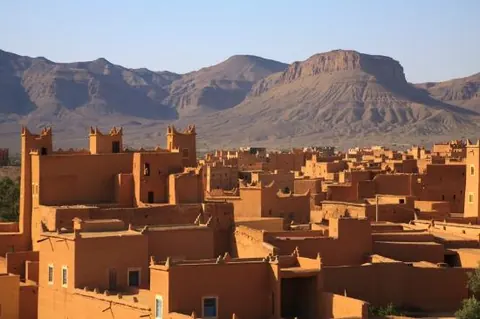
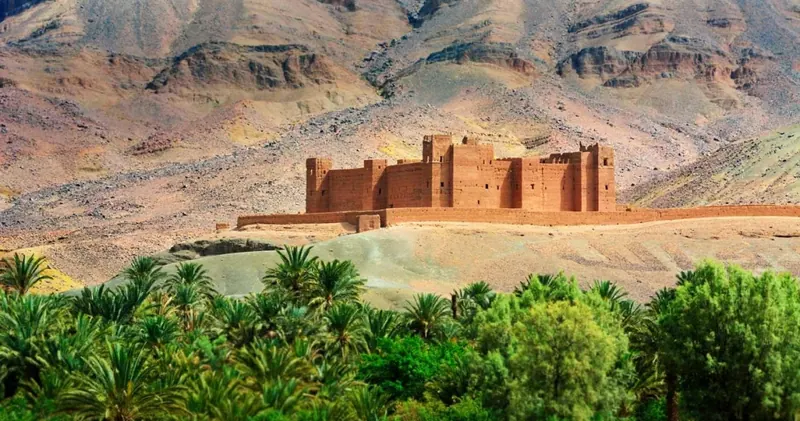
Coming from Ouarzazate, the road first passes the palm grove of Skoura and its 17th-century Amridil kasbah. It then crosses the Valley of Roses and Kelâat M’Gouna, the capital of the rose, where you can visit a women’s cooperative that distils rose water. In spring, rose hedges bloom along the fields.
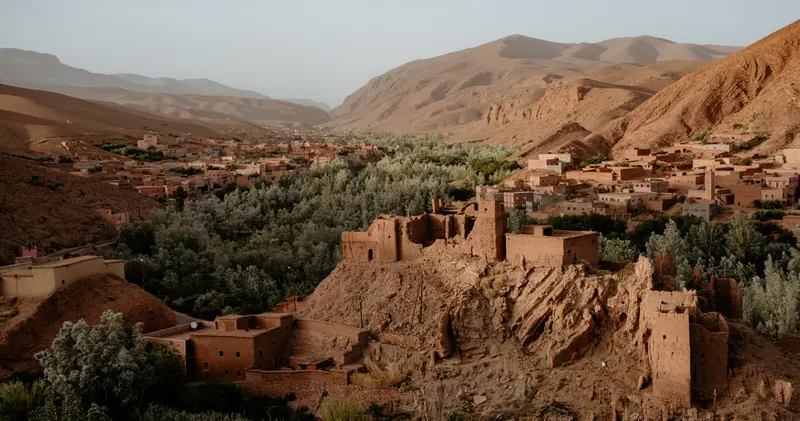
The Dadès gorges: a valley to explore
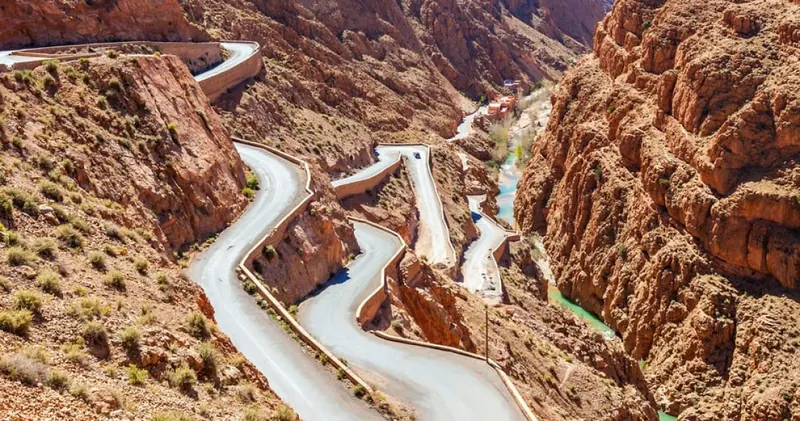
The Dadès is a long valley rather than a narrow passage. Driving up from Boumalne, the road runs alongside gardens, kasbahs and Berber villages, between cliffs with surprising shapes. The Tamlalt cliff is nicknamed “the Monkey Fingers” for its rounded rocks, and the village of Aït Mouted has a fine Glaoui kasbah. Higher up, around Aït Oudinar, the valley narrows: this is the most dramatic section, and a little further on the road climbs in tight bends that have become one of the most photographed sights in Morocco.
Hiking the mini-canyons
The Dadès is best discovered on foot. With a local guide, you follow paths through the mini-canyons and terraced fields, meeting the families of the valley. On our Berber Lands holiday, a whole day is devoted to it: about 5 hours of easy walking, on a route chosen the evening before with the guide depending on the river level. The Dadès gorges are quieter than the Todgha.
Tea with the cave nomads
Between the Valley of Roses and the Dadès, a track crosses stone canyons where a few nomadic families still live in caves. Several of our trips include a tea break with them: a simple, rare moment, to be shared with respect.
The Todgha gorges: the great canyon
About fifty kilometres to the east, at the heart of the Tinghir palm grove, the Todgha gorges are a different sight altogether. Over a short distance, the ochre walls rise to 300 or 400 metres and the gorge narrows to barely ten metres. The river runs at the foot of the cliffs, which climbers come from all over the world to scale.
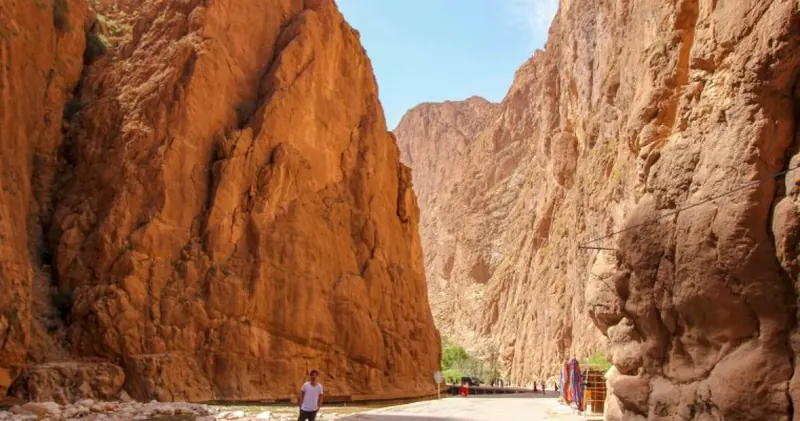
You visit the Todgha on foot, walking along the bottom of the gorge. The light is at its best in the late morning, when the sun reaches down between the walls. A short walk is enough to grasp its scale; keen walkers can go further up the valley.
Our tips
- Spend a night in the Dadès rather than driving straight through: the valley is at its best in the evening and early morning.
- Bring walking shoes and, in spring, sandals for crossing the fords.
- Pack a warm layer: evenings are cool in the gorges, even when it is hot in the desert.
Visit the gorges with us
- From Ouarzazate: Sea of Sand (a night in the Dadès, then the Todgha on the way to Merzouga) and Merzouga Desert (the Todgha);
- With the family: Berber Lands, with the hiking day in the Dadès;
- From Marrakech: Sahara Express and Erg & Reg.
See also our Dadès and Todgha gorges page.